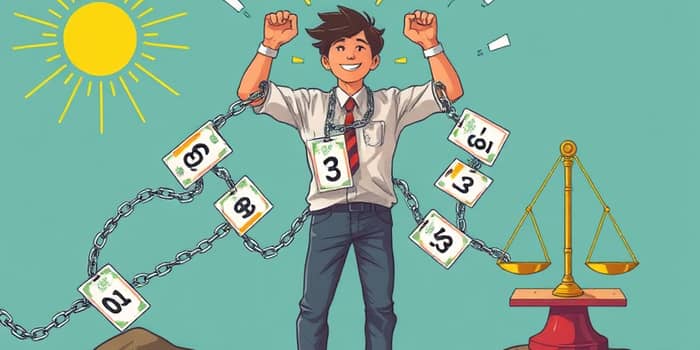
Debt affects more than your wallet; it influences your emotions, decisions, and long-term well-being. By understanding psychological drivers, you can regain control and pave a path to financial freedom.
Understanding Emotional Triggers
Borrowing often sparks an emotional roller coaster of hope, relief, panic, and regret. Initially, the excitement of new funds can mask the looming consequences of interest and repayments. Over time, feelings of guilt and shame emerge as balances grow, leading to avoidance behaviors like ignoring statements or missing payments.
Life events such as medical emergencies or sudden job loss can intensify this strain, triggering coping mechanisms like emotional spending that offer temporary relief. Unfortunately, these short bursts of gratification deepen the debt cycle, as indulgent purchases create regret, perpetuating anxiety and the urge to borrow again.
Behavioral Concepts Shaping Debt
Psychology research highlights key biases that shape borrowing habits. One major factor is present bias toward short-term rewards, where the immediate pleasure of spending outweighs distant benefits of saving. Mental accounting further complicates matters by dividing money into separate pockets for different debts, amplifying the pain of multiple balances.
- Present bias
- Psychological ownership
- Debt mental accounting
These cognitive shortcuts can be harnessed for good. By consolidating debts and reframing borrowed funds as temporary resources rather than personal earnings, you can reduce overborrowing and ease anxiety surrounding repayments.
Personality Traits and Borrowing
Individual differences in personality strongly predict debt behaviors. Impulsive individuals with low self-control are more prone to reckless purchases, while highly conscientious people excel at budgeting and timely repayments. Neuroticism often correlates with spending as a form of stress relief, deepening financial worries over time.
- Impulsivity drives immediate gratification
- Conscientiousness supports disciplined planning
- Neuroticism fuels stress-induced spending
- Extraversion seeks social image expenses
- Openness invests in new experiences
Recognizing your personality profile allows you to adopt targeted strategies, such as automating savings for those with impulsive tendencies or gamifying repayment milestones for goal-oriented individuals.
Social and Cultural Influences
Debt behaviors unfold within broader societal contexts. Social pressures to maintain certain lifestyles or keep pace with peers can normalize excessive borrowing. In many cultures, taking on a mortgage or student loan is accepted, while credit card debt carries stigma.
These norms shape your attitudes toward borrowing and repayment. Understanding that you are influenced by external expectations can help you set boundaries and redefine what financial success means on your own terms.
The Impact of Debt on Well-Being
Chronic indebtedness drains mental resources, as the mind dedicates energy to juggling balances and worrying about payments. This cognitive bandwidth depletion reduces concentration, decision-making ability, and can trap individuals in poverty through a feedback loop of present bias and risk aversion.
Financial strain also harms relationships, eroding trust and increasing conflict. The sooner you address underlying psychological factors, the faster you can restore both mental clarity and healthy interpersonal dynamics.
This research confirms that paying off entire accounts delivers more psychological benefit than reducing a large balance across multiple loans, underscoring the power of mental accounting in shaping well-being.
Strategies for Managing Borrowing Behavior
Breaking free from debt requires both practical tactics and mindset shifts. Strengthening your financial literacy empowers you to compare interest rates, understand amortization schedules, and create realistic budgets. Combining knowledge with self-awareness enhances control over spending impulses.
Mindfulness techniques can help you pause before making emotional purchases. By noticing triggers—such as stress or boredom—you create space to choose healthier alternatives that align with your goals.
- Track income and expenses daily
- Automate savings and repayments
- Cut discretionary spending gradually
- Gamify small debt payoffs
These steps transform debt management into an actionable and rewarding journey rather than a source of perpetual dread.
Tailored Interventions and Recovery Psychology
Debt recovery benefits from empathy-driven communication. Whether you’re seeking support from a counselor or negotiating with creditors, adopting a solution-focused communication approach avoids triggering defensiveness. Use positive language, outline clear options, and emphasize shared goals.
You can also reduce psychological ownership of borrowed funds through simple framing techniques. Label credit card balances as loans in your budgeting app or refer to financing as temporary cash flows. These subtle changes shift perceptions and decrease the urge to treat borrowed money as free spending power.
Cultivating a Supportive Environment
Building a network of accountability can significantly boost your resilience. Share your goals with trusted friends or family members, or join a community committed to financial wellness. Regular check-ins provide social reinforcement and reduce feelings of isolation.
Consider pairing up with a peer for mutual encouragement. This peer-driven accountability system harnesses social motivation and transforms debt repayment into a shared challenge, making progress more enjoyable and sustainable.
Putting It All Together: A Roadmap to Financial Freedom
Financial freedom is not solely a numbers game; it is a process of transforming your relationship with money. Begin by identifying emotional spending patterns, charting your debts, and selecting a payoff strategy that aligns with your personality and lifestyle.
Celebrate each milestone, no matter how small, to sustain motivation. Remember the power of one step at a time mindset, recognizing that compounding progress yields significant gains over months and years.
By leveraging psychological insights, you can dismantle the cycles of debt addiction, rebuild your cognitive resources, and foster healthy financial habits that endure across life’s challenges.
As you embark on this journey, know that understanding the psychology of debt is the first critical step toward lasting change. With compassion for yourself, clear planning, and the right strategies, debt becomes a surmountable obstacle rather than an insurmountable barrier.
References
- https://www.nationaldebtrelief.com/blog/financial-wellness/credit-score/the-psychology-of-debt-understanding-emotional-triggers-debt-addiction-and-financial-health/
- https://pmc.ncbi.nlm.nih.gov/articles/PMC6462060/
- https://www.chartway.com/post/5_surprisingly_fun_psychology_tricks_to_help_you_get_out_of_debt.html?psrc=788
- https://www.tecsg.com/the-psychology-of-debt-recovery-2/
- https://www.gsb.stanford.edu/faculty-research/working-papers/psychological-ownership-borrowed-money
- https://thedecisionlab.com/insights/consumer-insights/behavioral-science-of-paying-debts
- https://www.moneyfit.org/psychology-of-credit-card-debt/
- https://spssi.onlinelibrary.wiley.com/doi/10.1111/sipr.12074
- https://gobakergroup.com/psychology-behind-debt-collection/
- https://pmc.ncbi.nlm.nih.gov/articles/PMC7705353/