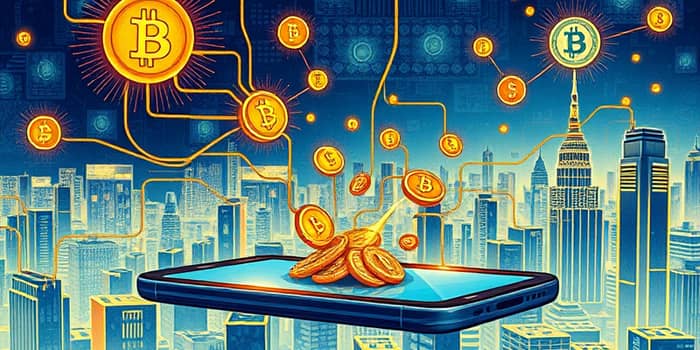
In an era where attention is currency, micropayments have emerged as a powerful tool to connect creators and consumers in an equitable ecosystem. By enabling granular payments for digital goods, micropayment systems are reshaping how we value and access online content and services.
Defining Micropayments vs Microtransactions
Micropayments are small online financial transactions, often under a dollar or even fractions of a cent. They were first conceptualized by Ted Nelson in the 1960s to assign individual copyrights to online content. Unlike microtransactions—app-based purchases for virtual game items—micropayments emphasize true per-item pricing without resorting to subscriptions or inflated bundles.
While microtransactions typically involve buying in-app currency like coins or gems for $0.99 or similar, micropayments allow users to pay directly for a single article, video, song, or API call. This pay-as-you-go model offers greater transparency and flexibility, reducing barriers for occasional users and enabling creators to monetize content without forcing long-term commitments.
How Micropayments Work Today
Traditional payment rails impose minimum fees that render tiny transactions economically unviable. To overcome this, modern micropayment architectures employ several mechanisms:
- Prepaid digital wallets: Users deposit funds into a wallet (e.g., Apple Wallet or PhonePe) and then draw down balances for each purchase, eliminating per-transaction overhead.
- Batching and aggregation: Small transactions accumulate and are settled in bulk, spreading the cost across many microcharges.
- Alternative rails: Blockchain solutions like the Bitcoin Lightning Network and stablecoin protocols facilitate near-zero fees and instant settlement, bypassing legacy intermediaries.
The transaction flow is simple: a user authorizes a small payment, the system deducts the amount from preloaded credits or routes it over a low-cost rail, then the content provider receives a batched payout. This transparent chain of custody ensures trust and accountability on both sides.
Benefits and Use Cases
By democratizing access, micropayments open new revenue streams for creators, platforms, and service providers. Key advantages include:
- Low friction for users: No long-term subscription needed, just pay for what you consume.
- Steady, scalable income for creators: Even tiny payments add up with high volume.
- Cost-effective alternatives to expensive card fees, especially for low-value transactions.
Common use cases range from per-article reading fees on news sites to tipping performers on live streaming platforms. Developers integrate micropayments for API access, while gaming platforms use them for unlocking premium levels or cosmetic upgrades without bloated shop interfaces.
Revolutionary Trends in 2026
As we move deeper into 2026, several converging trends are propelling micropayments toward mass adoption:
Stablecoins have gained momentum post–GENIUS Act, with Visa linking 130+ programs across 40 countries. This mainstream acceptance enables everyday purchases—like a morning coffee—to settle instantly through tokenized dollars.
Meanwhile, tokenization of real-world assets is shifting from pilot to production. Financial giants such as BlackRock and JP Morgan, through platforms like JPM Coin and Citi Token Services, are unlocking new pools of liquidity. Investors can now buy fractional shares of property or corporate bonds seamlessly on blockchain networks.
Perhaps most transformative is the rise of embedded finance powered by AI. Invisible payment orchestration ensures the optimal funding source—whether card, wallet, or digital currency—is used without user intervention. AI-driven fraud prevention and financing decisions further reduce friction and risk.
Challenges and Future Outlook
Despite the promise, several hurdles remain. Integrating legacy banking systems, navigating divergent global regulations, and combating new forms of digital fraud—like identity spoofing and smart-contract exploits—demand robust solutions.
To address these challenges, infrastructure must be designed with three core principles:
- AI-first architectures with human-in-loop governance to adapt to evolving threats.
- Interoperability across payment rails, wallets, and ledgers to future-proof investments.
- Cloud-native, scalable platforms that support 24/7 settlement and global compliance.
By adhering to these principles, fintech innovators can build resilient micropayment ecosystems that serve everyone from solo content creators to multinational enterprises.
Conclusion: A New Era of Digital Interaction
Micropayments are more than a convenience; they represent a shift toward a more equitable digital economy where value is exchanged precisely and fairly. As stablecoins, tokenization, AI embedding, and DeFi enhancements converge, the stage is set for unprecedented growth and creativity.
For creators, this means direct, low-barrier monetization of every snippet of value they produce. For consumers, it translates into the freedom to pay only for what matters. And for businesses, micropayments unlock markets that were once too costly to serve.
As we look toward the rest of 2026 and beyond, the potential for micropayments to transform industries—from media and gaming to finance and logistics—has never been clearer. Embrace this revolution, adopt the right tools, and join the movement toward a truly programmable, inclusive digital future.
References
- https://coinmarketcap.com/academy/glossary/micropayment
- https://www.weforum.org/stories/2026/01/digital-economy-inflection-point-what-to-expect-for-digital-assets-in-2026/
- https://www.phonepe.com/guides/payment-gateway/understanding-micropayments-definition-benefits-and-examples/
- https://thefinanser.com/2026/01/115369
- https://www.transfi.com/blog/micropayments-and-microtransactions-definition-how-it-works-and-benefits
- https://www.taylorwessing.com/en/insights-and-events/insights/2026/01/fintech-outlook-2026
- https://www.xflowpay.com/blog/what-are-micropayments
- https://blog.kraken.com/crypto-education/crypto-markets-in-2026
- https://corporate.visa.com/en/sites/visa-perspectives/trends-insights/2026-predictions.html
- https://www.bdo.com/insights/industries/fintech/2026-fintech-industry-predictions
- https://www.jpmorgan.com/payments/payments-unbound/magazine/articles/micropayments-moment
- https://www.omfif.org/dms2026/
- https://www.paymentsdive.com/news/how-payments-will-evolve-6-industry-trends-to-watch-in-2026/808869/
- https://www.netcetera.com/stories/news/payment-trends.html
- https://www.treasurers.org/hub/treasurer-magazine/whats-on-cards-for-payments-2026