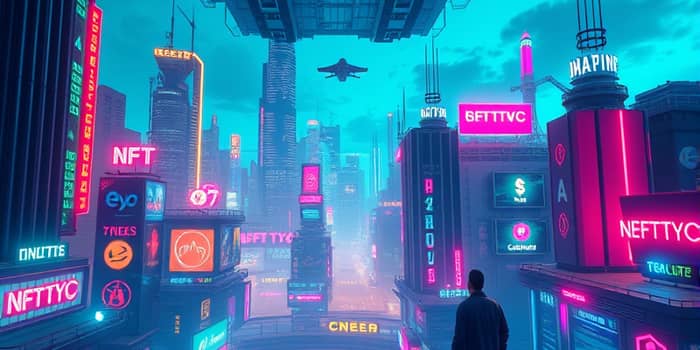
In 2026, the boundaries between gaming, the metaverse, and cryptocurrency are dissolving. What began as niche experiments in tokenized assets has blossomed into full-scale virtual societies where creativity and commerce flourish.
Players are no longer mere participants; they are stakeholders, developers, and co-creators in dynamic worlds that reward imagination with real-world value.
Key Themes Uniting Gaming, Metaverse, and Crypto
Several core concepts have emerged as the foundation for this transformation:
- Player-owned economies via NFTs and tokens empower gamers with true asset control.
- Blockchain interoperability for seamless asset transfers across virtual worlds.
- Decentralized autonomous organizations shaping governance and community decisions.
- Immersive VR/AR worlds with AI-driven NPCs that adapt to player actions.
This convergence of themes has ushered in a golden age of digital ownership. Gamers no longer rely on centralized publishers to dictate value, but instead collaborate within communities that co-create truly immersive virtual worlds and share in the spoils of success. As these paradigms mature, they pave the way for novel interactions, from social hubs to decentralized marketplaces where creativity and commerce intertwine.
Leading Metaverse Gaming Projects in 2026
Several standout titles have captured the imagination of players and investors alike. They combine cutting-edge graphics, strategic gameplay, and robust token economies.
These projects represent a cross-section of innovation, blending high-fidelity graphics with robust tokenomics. They showcase how player governance and token staking can transform simple gameplay into complex economies that rival real-world markets.
From strategic space conquest in Star Atlas to social gatherings in Decentraland, each world offers unique opportunities for exploration, creation, and profit. As development teams release new features, players will increasingly navigate interconnected landscapes, leveraging assets across multiple titles.
Technological Pillars Driving Growth
Key innovations are supporting an unprecedented evolution in virtual experiences. Blockchains like Ethereum, Solana, and Polygon enable low-cost transactions at scale, making daily gameplay seamless and affordable.
Meanwhile, VR and AR headsets equipped with advanced haptics and motion tracking deliver fully immersive interactions, while AI-driven content generation populates worlds with dynamic quests and NPCs that respond to player behavior.
Cross-chain bridges and standards such as ERC-721 and ERC-1155 ensure asset portability between games, shrinking the gap between distinct metaverse environments. Secure wallets like MetaMask and Ronin keep tokens and NFTs safe, although users must heed best practices to avoid scams.
The adoption of engines like Unreal Engine 5 and Unity’s next-gen renderers allows creators to build landscapes with lifelike physics and lighting. Combined with decentralized storage solutions, this means game assets can persist and evolve long after their initial launch, fostering communities that can modify, trade, and expand environments collaboratively.
Economic Models and Sustainable Rewards
Play-to-earn ecosystems reward skill and engagement by issuing tokens and NFTs tied directly to gameplay achievements. In platforms like Axie Infinity, daily earnings can range from $2 to $20 or more, depending on market conditions and player rank. This creates a direct link between time invested and financial return.
NFT marketplaces, supported by tokens such as ENJ, SAND, and MANA, enable true asset ownership, letting players buy, sell, and rent virtual land or items. Governance tokens like POLIS grant stakeholders voting rights in DAOs, ensuring community-driven token governance roadmaps and aligning incentives for long-term growth.
Trends and Future Outlook
As the sector matures, several trends stand out as catalysts for continued expansion:
- DeFi integration for in-game liquidity pools, enabling yield farming within virtual worlds.
- Mobile accessibility driving mass adoption as traditional studios embrace Web3 mechanics.
- Esports and creator economies further blurring lines between professional competition and community-led events.
- Stablecoins and fiat gateways smoothing on-ramps for new users entering P2E ecosystems.
By 2026 and beyond, we can expect richer social hubs where players gather for work, education, and entertainment without leaving the metaverse. DAO-driven governance will reward contributors who shape the direction of decentralized virtual societies, and AI assistants may personalize every aspect of gameplay.
Getting Started in the Crypto-Enabled Metaverse
For newcomers eager to explore this frontier, a clear roadmap can smooth the journey:
- Set up a secure wallet (e.g., MetaMask, Ronin) and back up private keys offline.
- Research tokenomics, team background, and community health before investing.
- Start with free-to-play entry points like Axie Infinity’s play-to-earn tutorial.
- Engage in community channels on Discord or Telegram to learn from experienced players.
- Experiment with low-stake land or NFT trading to gain hands-on understanding.
As you participate, remember that the metaverse is a rapidly evolving landscape. Staying informed through official channels and audits will help you avoid pitfalls and capitalize on emerging opportunities.
Together, gaming and crypto are forging a new digital economy where creativity, ownership, and innovation converge. Whether you’re a casual player, a dedicated gamer, or a seasoned investor, the metaverse of 2026 offers untold possibilities for engagement, reward, and community. Embrace this moment to become an active architect of virtual worlds and a pioneer in the next chapter of interactive entertainment.
References
- https://www.osiztechnologies.com/blog/top-6-metaverse-blockchain-games-about-to-explode-2026
- https://coinspot.io/en/technology/defi/top-10-metaverse-projects-to-watch-in-2026-decentraland-mana-and-more/
- https://blog.tokenmetrics.com/p/best-play-to-earn-crypto-games-in-2026-top-blockchain-games-rewarding-players-with-real-value
- https://hedera.com/learning/web3-gaming/
- https://www.blockchaingamer.biz/features/41347/top-50-blockchain-game-companies-2026/
- https://www.youtube.com/watch?v=MJKADYuhwTI
- https://www.altcoinbuzz.io/bitcoin-and-crypto-guide/top-4-crypto-gaming-altcoins-for-2026/
- https://www.meta.com/metaverse/