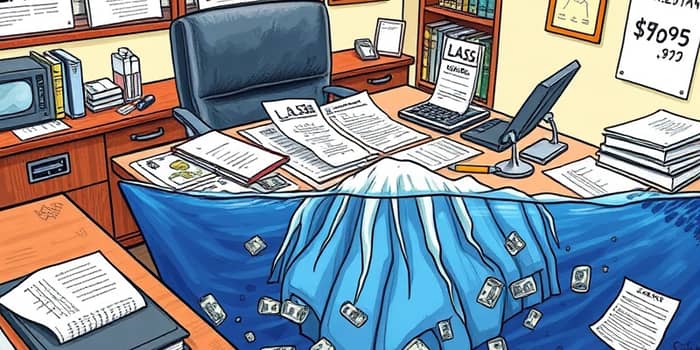
When shopping for a loan or credit product, it’s easy to be seduced by a low headline rate. But the reality is that the advertised interest rate alone rarely tells the full story. From origination fees to penalty APRs, the charges buried in fine print can add thousands of dollars to what you will actually repay.
In this article, we explore how to see past the marketing gloss and understand the Annual Percentage Rate reveals that encompass both interest and fees. You’ll gain insight into the mechanics of compounding, discover common hidden charges, and learn actionable strategies to keep your borrowing costs under control.
Understanding Interest Rate Nuances
Loans and credit cards typically quote a nominal rate, which reflects only the periodic interest charge on the principal balance. In contrast, the APR combines interest and fees into a single percentage that represents the true annual cost of credit. Comparing APRs across offers ensures you are making an informed financial decision.
Fixed-rate loans provide certainty, maintaining the same rate over the life of the debt. Alternatively, variable-rate loans fluctuate with market indices and can rise unexpectedly, increasing your monthly obligations.
Compound interest accelerates debt growth by applying interest to both principal and accumulated interest. With continuous compounding interest acceleration, a seemingly manageable balance can balloon if not addressed promptly.
Unveiling Hidden Fees and Charges
Beyond interest, lenders impose a variety of fees that pad their profit margins. Borrowers often overlook these until a bill arrives, at which point it may be too late to negotiate or avoid the cost.
Additional charges such as annual fees, balance transfer fees, foreign transaction fees, and servicing or exit fees can all contribute to an unexpectedly higher long-term costs. Overlooking even one can make a dramatic difference in your overall expense.
Prepayment, Exit Penalties, and Hedging Costs
Private loans and commercial financing often include clauses that penalize early repayment. Prepayment and defeasance terms are designed to preserve lender yield, sometimes requiring you to pay the present value of remaining interest or substitute collateral.
Exit or lockout periods may specify that if you repay before a certain date, you owe a percentage penalty—often 1% if more than a year remains, or 0.5% if under twelve months remain. These costs are frequently rolled into the balance and incur compounding fees over time.
Borrowers using floating-rate loans may purchase rate caps, swaps, or collars to manage volatility. While these hedges protect against rising rates, they come at a premium and cut into potential savings during favorable market moves.
Broader Impacts on Your Financial Health
High borrowing costs aren’t just about the immediate cash outlay. Missed payments or defaults hit your credit score, triggering penalty APRs that can exceed 29%. This credit score damage can cascade, making all future loans more expensive.
Institutional borrowers face operational traps: restrictive covenants, mandatory reserves, and limits on refinancing or equity extraction. These terms can lock you into suboptimal deals for years.
Regulatory protections, such as the Credit CARD Act of 2009, mandate clearer disclosures and ban some deceptive practices. Yet gaps remain, and lenders sometimes introduce surcharges—1–4% processing fees—disclosed only on receipts, further adding to your cost.
Real-World Examples
Consider a bank loan with a nominal rate 50 basis points lower than a competitor. If that lower-rate loan carries $100,000 in closing costs and higher servicing fees, you may pay more over three years despite the lower headline rate.
In another scenario, a borrower with a 55% loan-to-value mortgage at 5.75% may be tempted to refinance at lower rates as equity builds. However, prepayment penalties and yield-maintenance clauses can trap that equity, negating the advantage of early payoff or a better market rate.
One missed credit card payment can trigger a $35 late fee plus a penalty APR. The elevated rate applies to your full balance, causing the total repayment amount skyrockets, and a tarnished credit record leads to further rate hikes on new lines of credit.
Strategies to Avoid Costly Pitfalls
- Request detailed fee breakdowns in writing and review each line item before signing.
- Set up autopay or calendar reminders to avoid late fees and penalty APRs.
- Focus on comparing APRs instead of nominal rates to get an apples-to-apples cost view.
- Negotiate or ask to waive fees such as origination or late payment charges.
- Maintain strong credit and collateral to qualify for lower risk premiums.
- Consider no-fee cards or low-fee loans; use minimally required activity to avoid monthly maintenance charges.
Conclusion
The myth of the low interest rate can lure you into financial traps that erode your wealth and peace of mind. By understanding the full range of costs—fees, penalties, compounding interest effects, and regulatory protections—you arm yourself with the knowledge needed to make smarter borrowing decisions.
Always demand transparency, read the fine print, and compare APRs. Implement the strategies outlined here to shield yourself from the hidden charges that inflate your debt. Empowered with this awareness, you can transform borrowing from a source of stress into a tool for opportunity and growth.
References
- https://noteservicingcenter.com/the-true-cost-of-private-loans-uncovering-unfavorable-terms/
- https://www.accrediteddebtrelief.com/blog/the-debt-detective-uncovering-hidden-costs-in-credit-card-bills/
- https://www.defeasewitheasetc.com/the-true-cost-of-debt-beyond-interest-rates/
- https://www.nationaldebtrelief.com/blog/financial-wellness/credit-score/the-hidden-fees-of-credit-cards-and-how-to-avoid-them/
- https://www.advantageccs.org/blog/the-hidden-costs-of-debt-how-interest-rates-and-fees-can-add-up/
- https://payhawk.com/en-us/blog/what-are-common-hidden-credit-card-fees
- https://dealstream.com/blog/the-true-cost-of-borrowing-what-interest-rates-really-mean-for-small-businesses
- https://www.bankrate.com/credit-cards/advice/avoid-common-credit-card-fees-2/
- https://apriority.ai/blog/personal-loans/cost-of-personal-loan
- https://www.wsfsbank.com/resources/understanding-the-high-cost-of-hidden-fees/
- https://wwfcu.org/understanding-loan-interest-the-cost-of-borrowing-money/
- https://bettermoneyhabits.bankofamerica.com/en/personal-banking/avoid-bank-fees
- https://www.experian.com/blogs/ask-experian/personal-loan-fees-you-should-watch-out-for/
- https://www.schwab.com/learn/story/borrowing-strategies-big-expenses